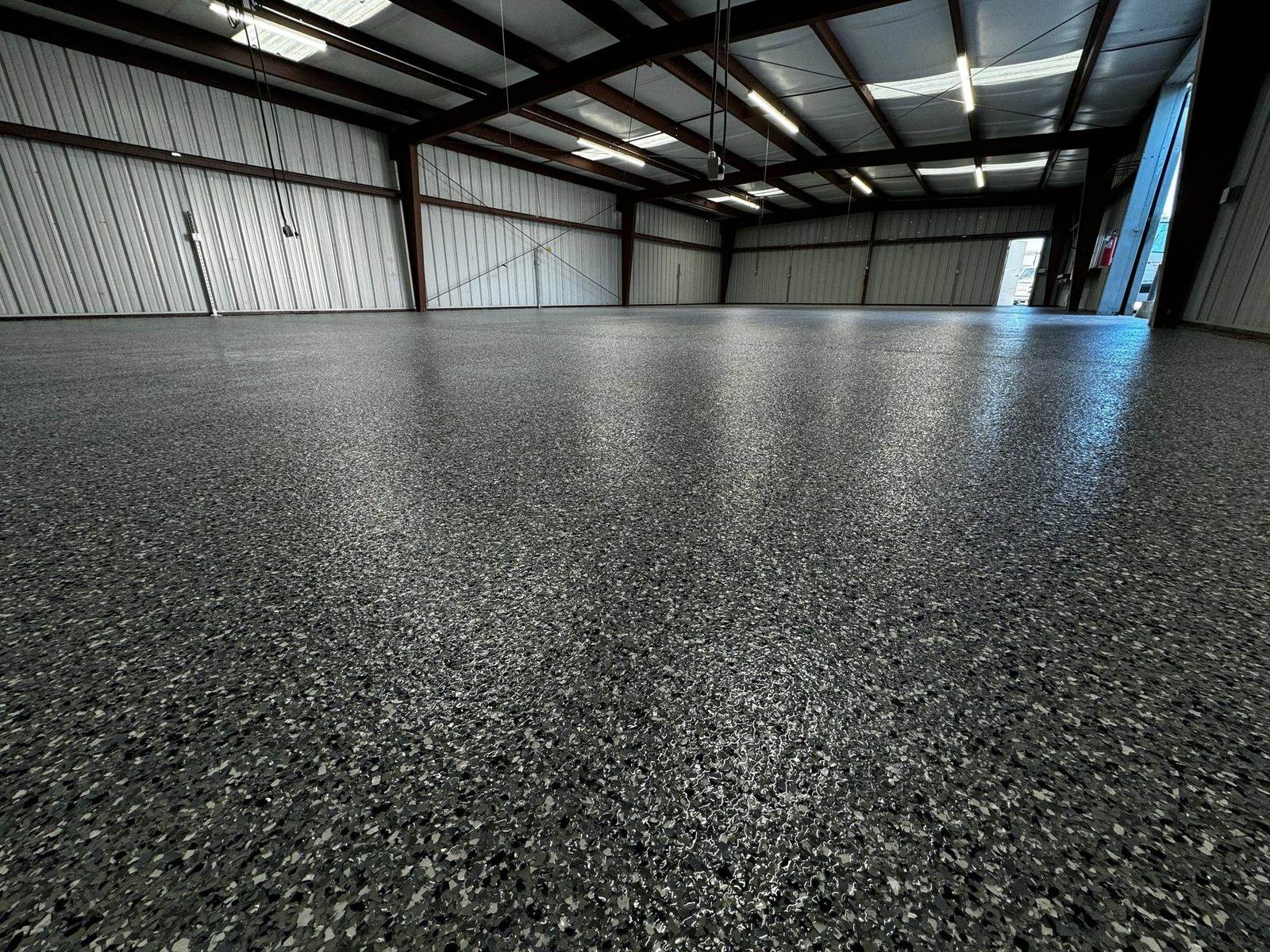
Epoxy flooring in Highlands Ranch, CO seals concrete garage, basement and workspace floors under a tough coating that resists stains, salt and wear. We install these floors for Highlands Ranch homeowners in Northridge, Eastridge, Westridge, Southridge and the newer neighborhoods to the south, as well as for local businesses. Every project begins with grinding the concrete and checking it for cracks and moisture. The finished floor is sealed, easy to clean and built to last through Colorado winters.
The Floors We Coat in Highlands Ranch
Most of our work falls into three categories, each with its own page:
- Garage floor coating for two- and three-car garages that collect slush, road salt, oil and tire marks.
- Metallic epoxy floors for finished basements, home theaters, gyms and bonus rooms.
- Commercial epoxy flooring for shops, warehouses, fitness studios, clinics and restaurants.
We also install polyaspartic coatings, solid-color basement floors and flake systems for laundry and mud rooms, and we handle crack repair, grinding and concrete sealing.
A Community Built in Stages
Highlands Ranch was planned as one large community. The first residents moved in during 1981, and building continued in waves for decades. Today it has more than 31,000 homes. That history means garage floors here range widely in age and condition:
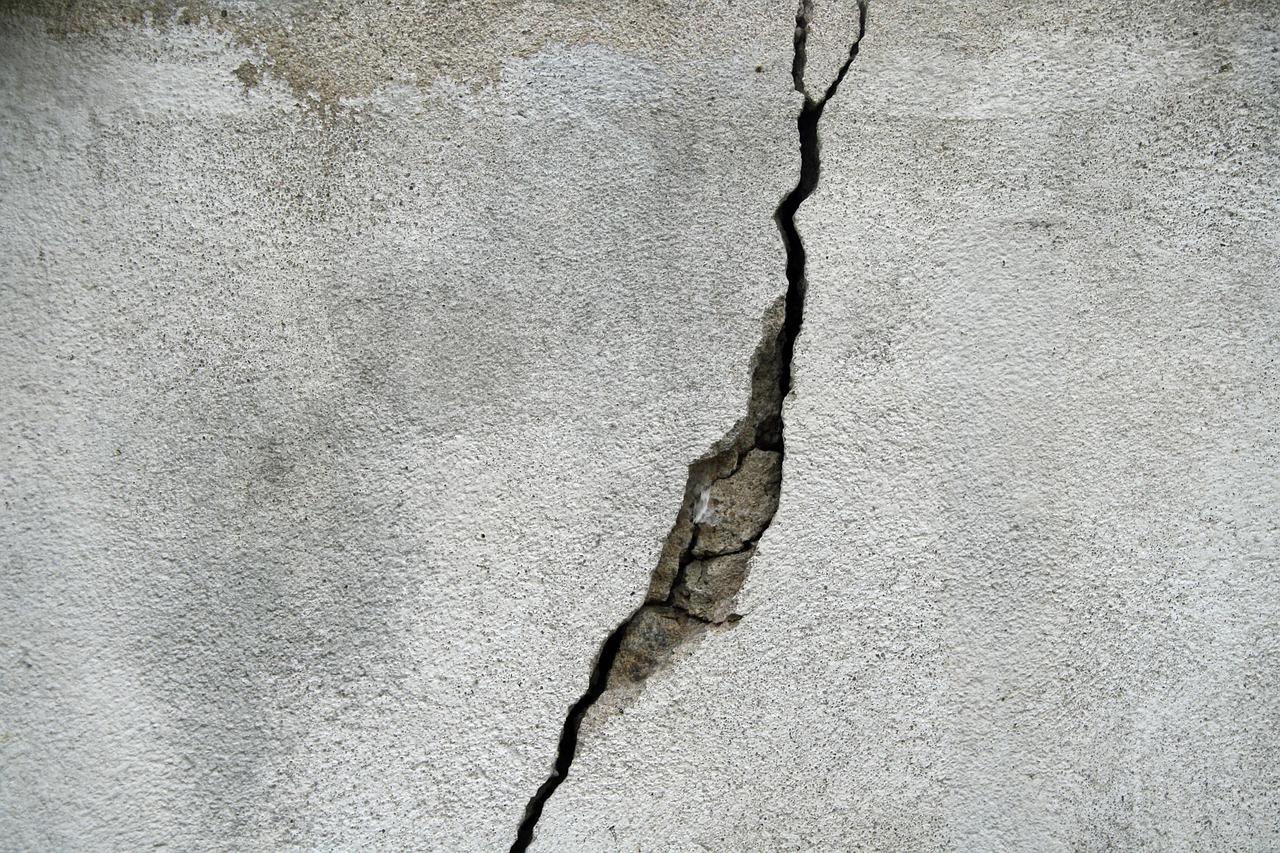
- Northridge and Eastridge include some of the earliest neighborhoods. Their slabs often carry decades of oil stains, old paint, and settlement cracks.
- Westridge and Southridge mix older and newer homes, with many two- and three-car garages that double as storage and workshop space.
- Firelight and the BackCountry area in the south include newer homes and larger garages, where the concrete is often in good shape and ready for coating with less prep.
Because Highlands Ranch homes are part of the Highlands Ranch Community Association, exterior changes go through architectural review. Interior garage and basement floors are a simple way to upgrade a home without changing its outside appearance.
What Winter Does to a Garage Slab
From November into spring, cars come home carrying snow, slush and road treatments. Colorado’s highway crews use magnesium chloride and salt-based de-icers, and they end up on garage floors as cars drip dry. On bare concrete, that brine soaks in. Overnight freezing and daytime thawing then work the moisture inside the slab. The usual result is:
- Surface scaling in the parking spots and along the door.
- White rings and crusty residue that come back after every storm.
- Rough, dusty concrete that sticks to shoes and tracks inside.
With a coating in place, the brine beads up on a sealed surface, and a floor squeegee sends it out the door.
Summer Heat and Hot Tires
Summer brings a different stress. After a drive in the heat, tires are hot and soft. They can bond to thin coatings and pull them up when the car leaves. This “hot tire pickup” is the most common way DIY kits fail. Thicker coatings bonded to ground concrete resist it, and polyaspartic topcoats are made to handle it.
Strong high-altitude sun is the other summer factor. Clear epoxy can yellow in UV light, so for garages that face the afternoon sun, we recommend a UV-stable topcoat.
Picking Flake Colors for a Highlands Ranch Garage
Color choice is more practical than it looks. A garage floor here spends the winter under gray slush, white salt film and tan road grit, so the best blends tend to include those tones. A mix of grays, tans and a little black hides residue between cleanings. Very dark floors show salt rings, and very light floors show tire marks, so most homeowners land in the middle.
Chip size matters too. Larger flakes read as a bold pattern and hide more. Smaller flakes give a finer, more uniform look. We bring full-size samples to the visit so you can see them on your own concrete, under your own lights, with the door open and closed.
When the Garage Is More Than Parking
Many Highlands Ranch families use the garage for much more than cars. It holds bikes, skis, camping gear, a workbench or a home gym, and in summer it may be the place the kids hang out with the door open. A coated floor makes all of that easier. Spilled paint, bike grease and sports drinks wipe up instead of staining. Dust drops sharply, so stored gear stays cleaner. Rolling tool chests and creepers move more smoothly across a sealed surface. If your garage doubles as a gym, we can add extra texture to the topcoat and recommend rubber mats for heavy weights.
Steps in a Typical Project
- Call or send the form with a few details about the space.
- Free visit: we inspect the concrete, test moisture, measure and show samples.
- Written quote listing the prep, products and cure times.
- Prep day: grinding, crack and pit repair, and thorough vacuuming.
- Coating: base coat, flakes or color, and topcoat.
- Cure: we give you the timing for foot traffic and for parking.
Smaller garage projects often wrap up quickly with fast-curing systems. Larger or decorative floors take longer, and we’ll lay out the schedule before work starts.
Questions to Ask Any Coating Installer
Before choosing anyone, it helps to ask:
- What prep is included? Diamond grinding is the standard for a lasting bond.
- How thick is the system, and what is each coat made of?
- Is the topcoat UV-stable?
- How are cracks, joints and the garage step handled?
- Will you test for moisture in a basement or below-grade space?
- What does the coating manufacturer offer, and what conditions apply?
Clear answers in writing make it easier to compare quotes on equal terms. These questions are worth asking on any epoxy flooring project, from a two-car garage to a finished basement.
Keeping a Coated Floor Looking Good
Coated floors are low-maintenance. A dust mop or soft broom handles daily grit. In winter, squeegee meltwater toward the drain or door and rinse salty film off with water and a gentle cleaner. Use mats under heavy equipment, and set plywood under jack stands when you work on a car. With that care, the floor stays clean and bright.
Basements and Bonus Rooms
Garages aren’t the only floors that benefit. Many Highlands Ranch homes have unfinished or partly finished basements with bare concrete used for storage, laundry or a workout area. A solid-color or flake coating seals the dust and brightens the space at a fraction of the effort of a full finish. For a basement that’s becoming living space, a metallic system adds a finished, custom look. Either way, the slab gets a moisture test first, since below-grade concrete can carry vapor from the soil.
Neighborhoods We Serve
We coat floors throughout Highlands Ranch, including Northridge, Eastridge, Westridge, Southridge, Firelight and BackCountry. Call us to talk about your garage, basement or business floor.